
Adams & Associates - Learn with Us
Don't Get Burned: Fire Prevention Basics for Your Business
![[HERO] Don't Get Burned: Fire Prevention Basics for Your Business](https://cdn.marblism.com/14JYcZp-xp7.webp)
Welcome to the final post in our Safety Week series! We've covered slips and falls, fleet safety, farm protection, and volunteer safety. Now it's time to tackle one of the most important topics of all: fire prevention.
Here's the good news. Most workplace fires are completely preventable. A few simple habits and a solid plan can protect your employees, your property, and your business.
Let's walk through the basics together.
Why Fire Prevention Matters for Your Business
A fire can happen in any workplace. Offices, retail stores, restaurants, warehouses, no business is immune. And when a fire strikes, the damage goes beyond the flames. You're looking at:
- Property damage and lost inventory
- Business interruption and lost revenue
- Potential injuries to employees or customers
- Increased commercial insurance premiums down the road
The best defense? Prevention. Taking a few proactive steps now can save you from a lot of heartache later.
The Fire Triangle: Understanding What Starts a Fire
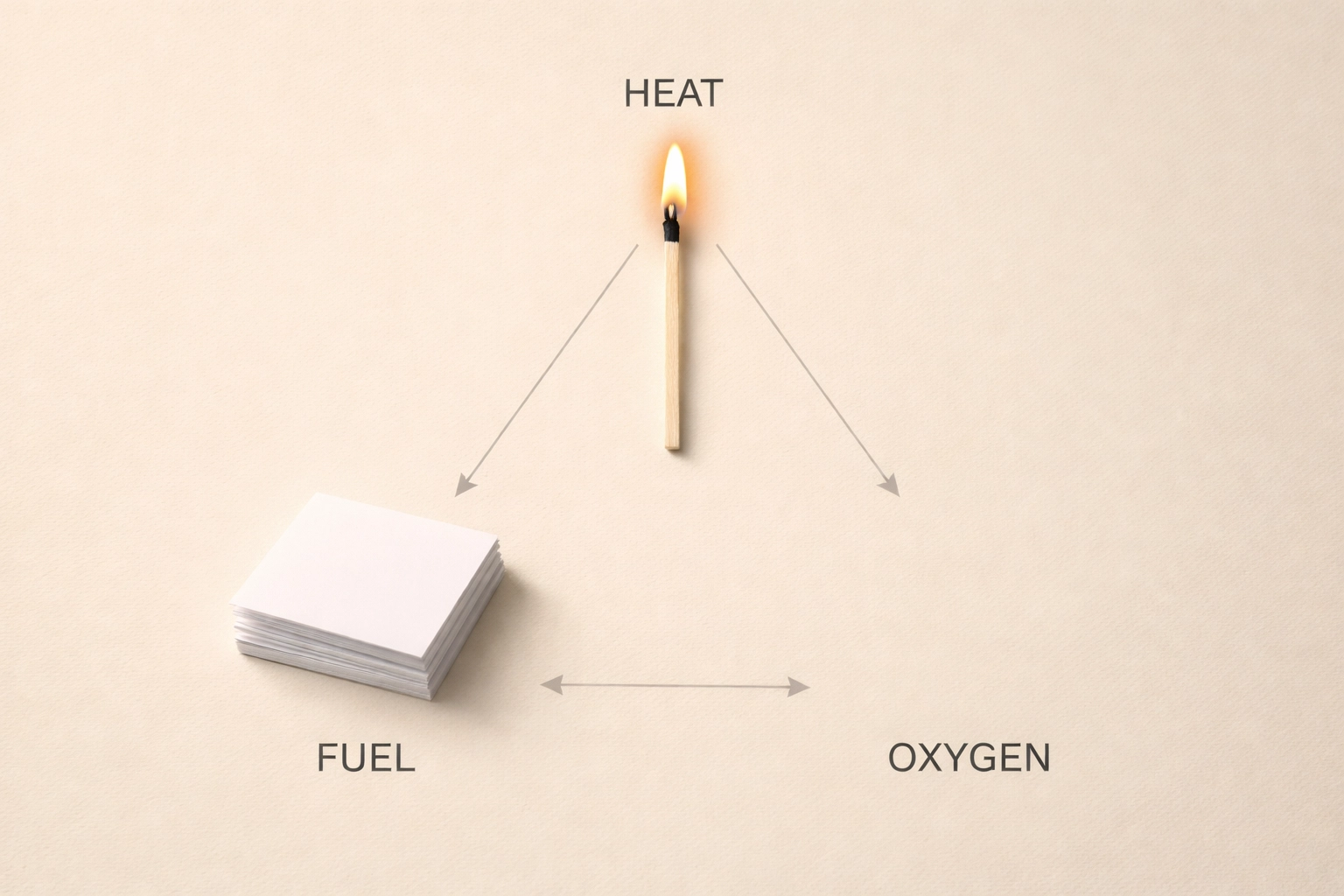
Before we dive into prevention tips, it helps to understand how fires start. Every fire needs three things:
- Heat – An ignition source like a spark or flame
- Oxygen – Always present in the air around us
- Fuel – Anything that can burn (paper, fabric, chemicals, etc.)
Since we can't remove oxygen from the equation, fire prevention comes down to keeping fuel away from heat sources. Simple, right?
Common Fire Hazards in Business Properties
Let's take a look at the most common culprits. You might be surprised how many of these are lurking in your workplace right now.
Electrical Hazards
Electrical issues are one of the leading causes of commercial fires. Watch out for:
- Overloaded power strips and outlets – Plugging too many devices into one outlet creates heat buildup
- Frayed or damaged cords – Replace these immediately
- Daisy-chaining power strips – Plugging one power strip into another is a recipe for trouble
- Old or faulty wiring – Have an electrician inspect your building regularly
Quick tip: Take a walk around your office today. Count how many devices are plugged into each outlet. If you're seeing a tangled mess of cords and adapters, it's time to make some changes.
Heating Equipment
Portable heaters are popular in chilly offices, but they're also fire starters when used improperly.
- Keep heaters at least three feet away from anything that can burn
- Never leave them running unattended
- Make sure they have an automatic shut-off feature
- Plug them directly into wall outlets (not power strips)
Break Room and Kitchen Areas
Cooking is one of the most common causes of workplace fires. Even a simple toaster can cause problems.
- Clean up grease and crumbs regularly
- Check cords on appliances for damage
- Unplug appliances when not in use
- Never leave cooking appliances unattended

Clutter and Storage
Piles of paper, cardboard boxes, and general clutter act as fuel for fires. Keep work areas tidy and store flammable materials properly.
"Good housekeeping is the foundation of fire prevention. A clean workplace is a safer workplace."
Keep Your Exits Clear
This one sounds obvious, but you'd be amazed how often it gets overlooked. Blocked exits can turn a manageable situation into a tragedy.
Here's your checklist:
- All exit doors open easily and are never locked from the inside
- Exit signs are visible and illuminated
- Hallways and stairwells are free of storage and clutter
- Nothing is blocking access to fire extinguishers or electrical panels
- Sprinkler heads have at least 18 inches of clearance
Take a quick walk through your building. If you have to squeeze past boxes or move furniture to reach an exit, that's a problem.
Test Your Smoke Detectors
Smoke detectors are your first line of defense. But they only work if they're working.
Here's what to do:
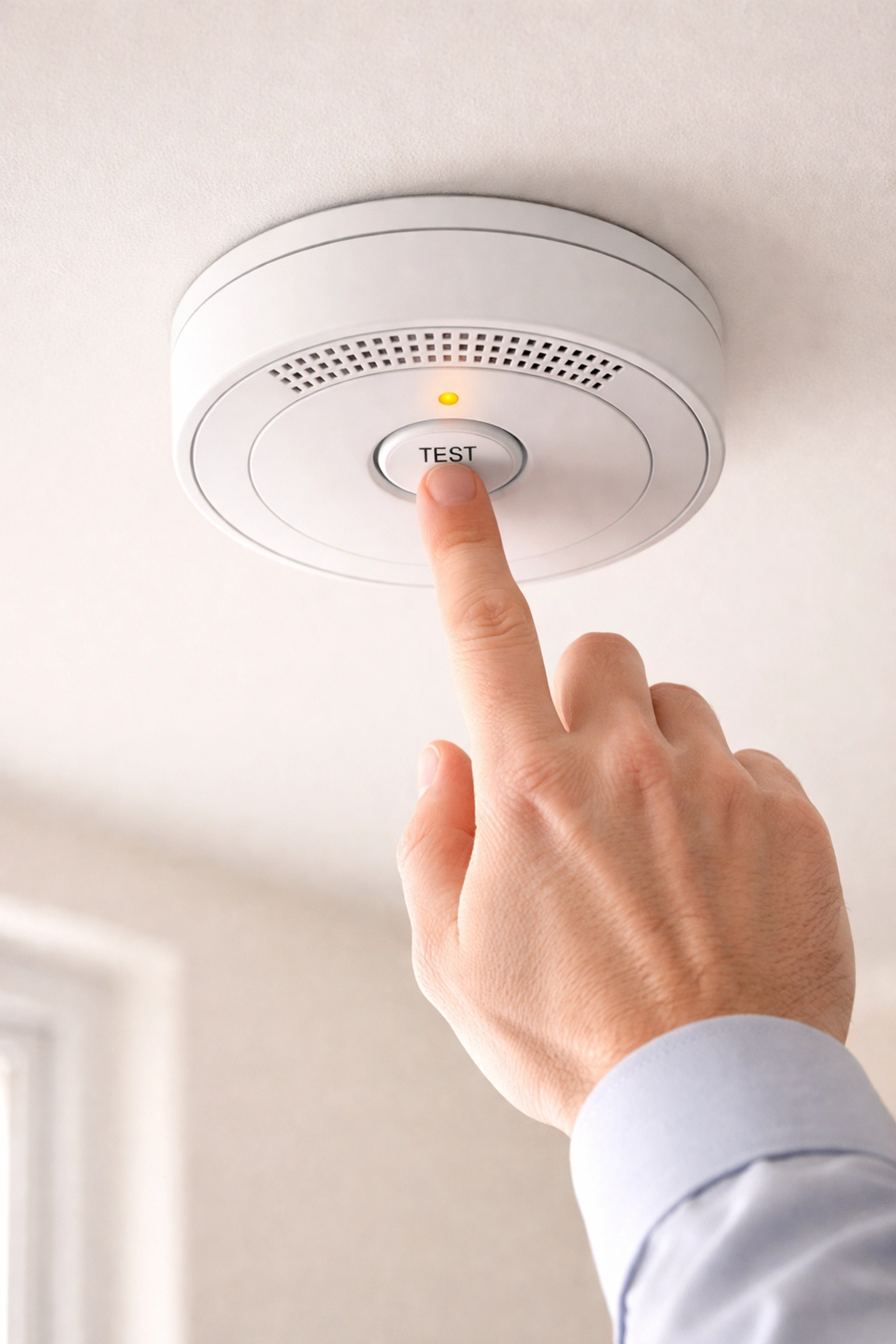
- Test monthly – Press the test button and make sure the alarm sounds
- Replace batteries annually – Even if they seem fine
- Replace the entire unit every 10 years – Technology improves, and old detectors become less reliable
- Keep them clean – Dust can interfere with sensors
For business properties, smoke detectors should be placed on every floor, in stairways, and spaced no more than 30 feet apart. If you're unsure about placement, your local fire department can help.
Create a Clear Evacuation Plan
Having an evacuation plan isn't just smart, it's often required. More importantly, it saves lives.
Your Plan Should Include:
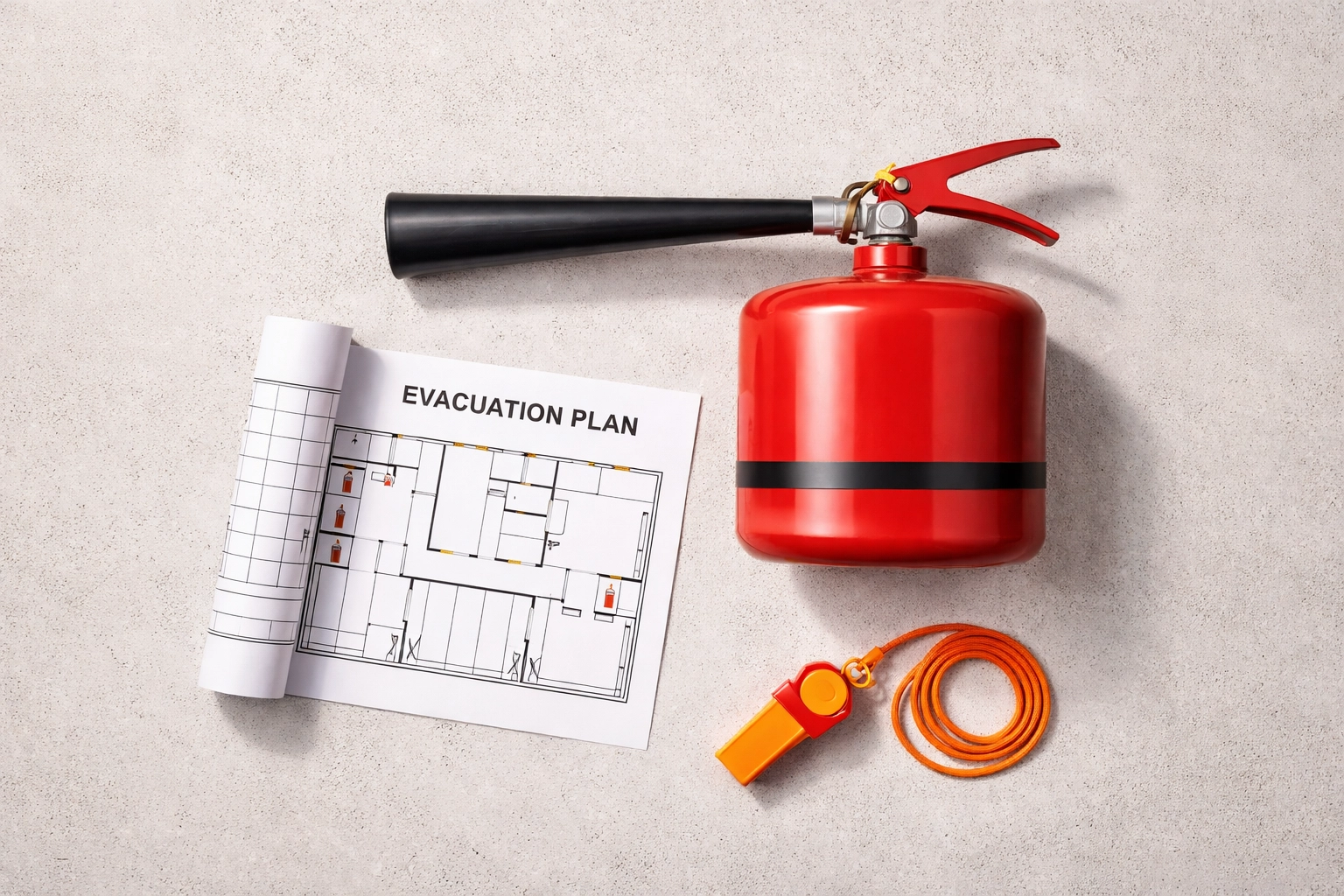
- Clearly marked evacuation routes – Post maps in common areas and near exits
- A designated meeting spot – Choose a location far enough from the building to stay safe and allow firefighter access
- Assigned roles – Who calls 911? Who checks that everyone made it out?
- Special considerations – Plan for employees with mobility challenges or other needs
Train Your Team
A plan is only useful if everyone knows it. Make sure your employees understand:
- Where the exits are
- Where fire extinguishers are located (and how to use them)
- The designated meeting spot
- To take stairs instead of elevators during a fire
- To close doors behind them to slow the spread of fire
Conduct fire drills regularly. Yes, they feel a little silly. But when an emergency happens, muscle memory kicks in. Your team will thank you.
"In an emergency, people don't rise to the occasion: they fall to the level of their training."
Fire Extinguisher Basics
Every business should have fire extinguishers in accessible locations. Here are the essentials:
- Place them along normal travel paths and near exits
- Mount them 4 inches to 5 feet off the ground
- Make sure employees know the P.A.S.S. method:
- P ull the pin
- A im at the base of the fire
- S queeze the handle
- S weep side to side
Contact your local fire department if you're unsure how many extinguishers you need or where to place them.
Regular Maintenance Goes a Long Way
Fire prevention isn't a one-time task. Build these habits into your routine:
- Schedule annual electrical inspections
- Test smoke detectors and alarms monthly
- Have fire extinguishers inspected yearly
- Review and update your evacuation plan annually
- Keep sprinkler systems maintained and tested
Protect Your Business with the Right Coverage
Even with the best prevention efforts, accidents happen. That's where your property insurance and commercial insurance come in. The right coverage can help you recover and rebuild if the worst occurs.
Not sure if your current policy has you covered? It might be time for a review.
QUESTIONS? We're always happy to chat about your coverage or help you think through your risk management strategy. Reach out to us anytime( we're here to help.)