
Adams & Associates - Learn with Us
The Volunteer Safety Guide: Protecting the Heart of Your Nonprofit
![[HERO] The Volunteer Safety Guide: Protecting the Heart of Your Nonprofit](https://cdn.marblism.com/7uBjq0kIq94.webp)
Volunteers are the heartbeat of every nonprofit. They show up, roll up their sleeves, and give their time because they believe in your mission. That kind of dedication deserves to be protected.
But here's the thing: keeping your volunteers safe isn't just the right thing to do. It's also one of the smartest ways to protect your organization from unexpected risks and potential liability claims.
The good news? Building a solid volunteer safety program doesn't have to be complicated. With a few straightforward steps, you can create an environment where everyone feels confident, prepared, and ready to do great work.
Let's walk through the essentials together.
Why Volunteer Safety Matters More Than You Think
When someone volunteers for your nonprofit, they're trusting you with their time and well-being. That trust comes with responsibility.
Here's what's at stake:
- Your volunteers' health and safety – The people who give their time deserve a safe environment.
- Your organization's reputation – Word travels fast. A safe, well-organized nonprofit attracts more support.
- Your financial stability – Injuries and accidents can lead to costly claims, even lawsuits.
A proactive approach to safety helps you avoid these pitfalls while showing your volunteers that you genuinely care about them.
"Volunteers don't get a paycheck. They get paid in appreciation, purpose, and knowing they made a difference. Keeping them safe is how we say thank you."

Start with the Right People: Background Checks
Before anyone joins your team: even as a volunteer: it's wise to know who you're working with. Background checks aren't about distrust. They're about due diligence.
When are background checks especially important?
- Working with children, seniors, or vulnerable populations
- Handling money or sensitive donor information
- Driving on behalf of the organization
- Working in someone's home or private space
A simple background screening process protects everyone involved. It also demonstrates to donors, partners, and the community that your nonprofit takes safety seriously.
Quick tip: Create a clear, written policy about when and how background checks are conducted. Consistency is key.
Training: Set Your Volunteers Up for Success
Would you hand someone the keys to a car without making sure they knew how to drive? Of course not. The same logic applies to volunteer tasks.
Every volunteer should receive training specific to their role. This isn't about overwhelming people with information: it's about giving them the tools they need to do their job safely and confidently.
Your training checklist should include:
- A walkthrough of their specific tasks and responsibilities
- How to use any tools or equipment they'll encounter
- Location of first aid kits, fire extinguishers, and emergency exits
- Who to contact if something goes wrong
- Any personal protective equipment (PPE) requirements
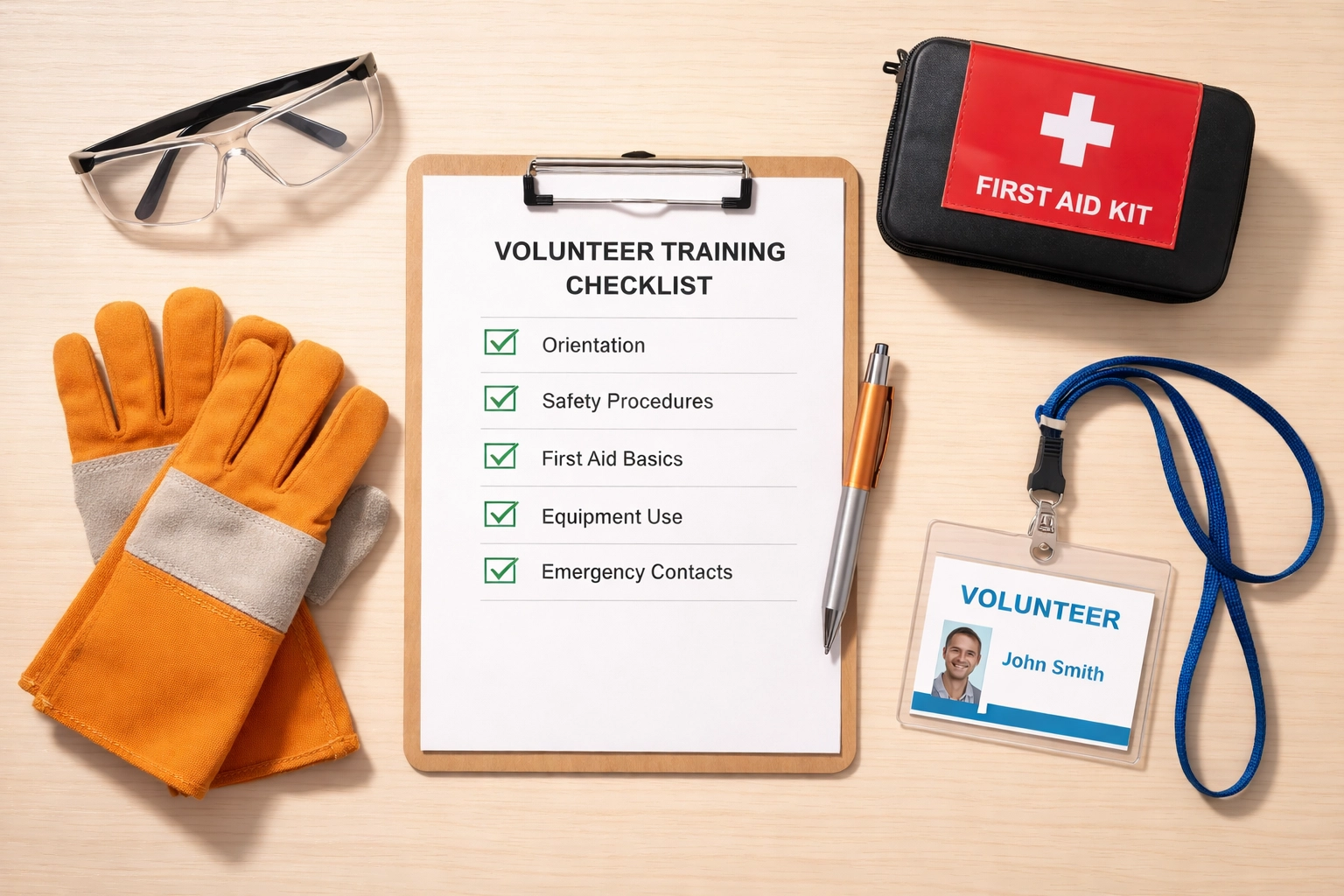
Pro tip: Keep training sessions short and focused. People retain more when they're not drowning in details. A quick 15-minute orientation beats a two-hour lecture every time.
Special Considerations for High-Risk Tasks
Some jobs carry more risk than others. If volunteers will be doing any of the following, make sure they have documented experience or specialized training:
- Using power tools or heavy equipment
- Working at heights or on ladders
- Handling hazardous materials
- Driving organizational vehicles
For volunteers under 18, it's best to avoid assigning tasks that involve ladders, heights, or dangerous equipment altogether.
Clear Communication: The Safety Net You Can't See
Miscommunication is one of the leading causes of workplace accidents: and volunteer settings are no different.
When everyone knows what's expected, who's in charge, and how to report concerns, things run smoothly. When they don't? That's when accidents happen.
Here's how to keep communication crystal clear:
- Write it down. Create simple, easy-to-read safety guidelines that every volunteer receives.
- Say it out loud. Review key safety points at the start of each shift or event.
- Make it accessible. Consider using QR codes that link to quick reference videos or safety reminders.
- Encourage questions. Let volunteers know it's okay (and encouraged!) to ask for clarification.

Keep the Conversation Going
Volunteers often work limited hours, so regular reminders are essential. A quick safety huddle at the beginning of a shift or a friendly reminder email before an event goes a long way.
Designate a Safety Point of Contact
Here's a simple step that makes a big difference: assign someone to be the go-to person for all things safety.
This doesn't have to be a full-time position. It just needs to be someone volunteers can turn to when:
- They notice a hazard
- They're unsure how to do something safely
- An injury or accident occurs
- They have questions about safety procedures
Having a clear point of contact eliminates confusion during stressful moments. It also ensures that safety concerns don't fall through the cracks.
Bonus: This person can also be responsible for keeping your safety documentation up to date and coordinating any necessary training sessions.
Emergency Preparedness: Hope for the Best, Plan for the Rest
No one wants to think about emergencies. But a little preparation today can prevent a lot of chaos tomorrow.
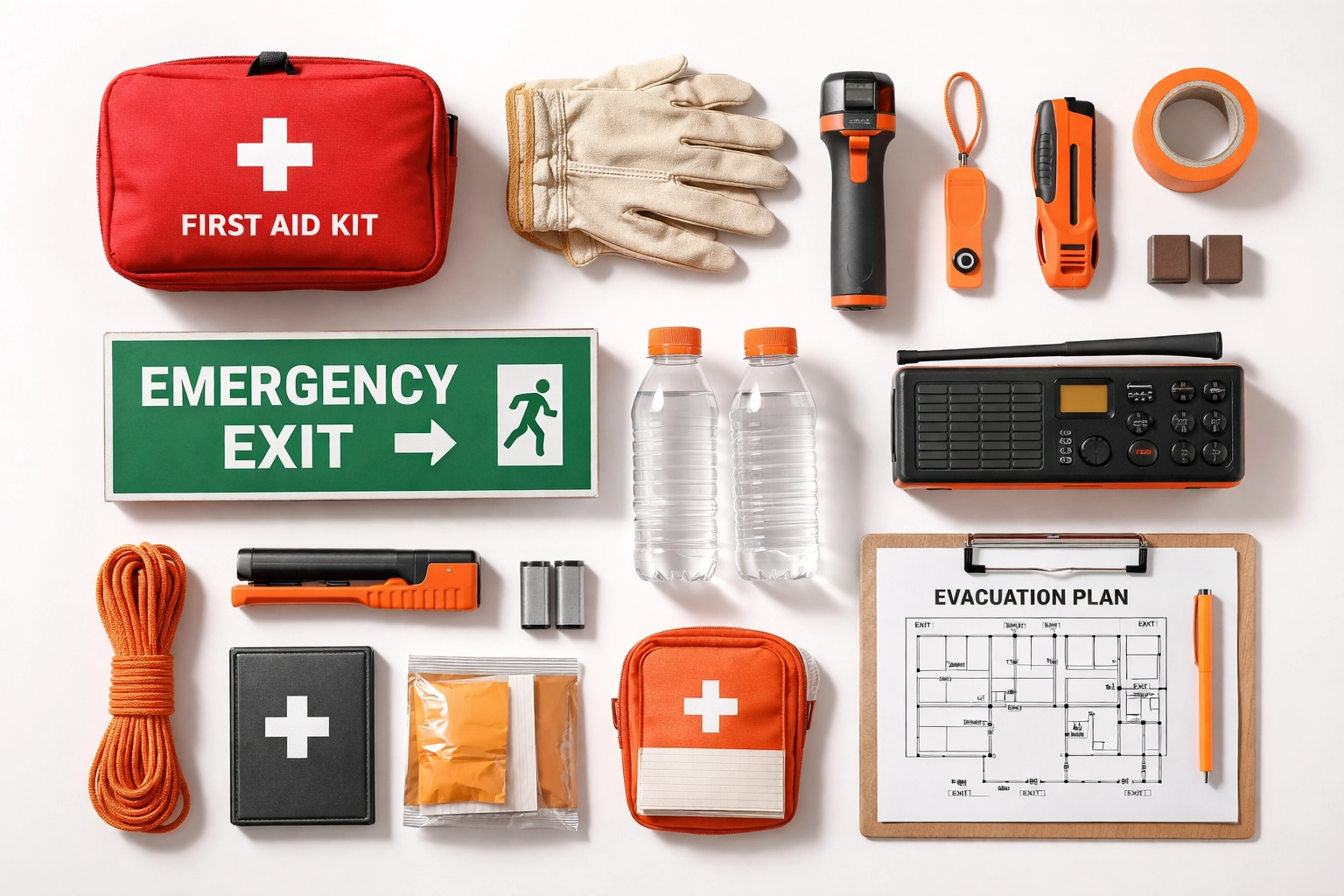
Every nonprofit should have:
- A written emergency action plan
- Posted evacuation routes in all work areas
- A first aid kit that's fully stocked and easily accessible
- At least one person on-site trained in CPR and basic first aid
- A clear communication plan for reaching volunteers during an emergency
Practice makes perfect. Consider running a quick drill once or twice a year so everyone knows what to do if the unexpected happens.
Don't Forget the Insurance Safety Net
Even with the best safety program in place, accidents can still happen. That's where liability insurance comes in.
The right coverage protects your nonprofit from the financial fallout of volunteer injuries, property damage, or third-party claims. Think of it as a safety net for your safety net.
Common coverage options for nonprofits include:
- General liability insurance
- Directors and officers (D&O) insurance
- Volunteer accident coverage
- Commercial umbrella policies
Not sure what your organization needs? That's okay. A quick conversation with an insurance professional can help you figure out the right fit for your nonprofit's unique situation.
QUESTIONS? We're always happy to help you sort through your options. Reach out to us anytime.
Putting It All Together
Protecting your volunteers doesn't require a massive budget or a dedicated safety department. It just takes intention, communication, and a commitment to doing things the right way.
Here's your quick-reference checklist:
- ✅ Conduct background checks for sensitive roles
- ✅ Provide task-specific training for every volunteer
- ✅ Communicate safety expectations clearly and often
- ✅ Designate a safety point of contact
- ✅ Prepare for emergencies with a written plan
- ✅ Review your liability insurance coverage annually
Your volunteers give so much to your mission. A thoughtful safety program is one of the best ways to give back to them.
Ready to make sure your nonprofit is fully protected? Get a quote today and let's find the right coverage for your organization.