
Adams & Associates - Learn with Us
Wait, Is That a Hazard? 5 Simple Ways to Prevent Workplace Slips and Falls
![[HERO] Wait, Is That a Hazard? 5 Simple Ways to Prevent Workplace Slips and Falls](https://cdn.marblism.com/EWb6Oa5Ed-3.webp)
Welcome to Day 1 of our 5-Day Safety Series!
Here's a number that might surprise you: slips, trips, and falls are one of the leading causes of workplace injuries in the United States. We're not talking about construction sites or warehouses. We're talking about offices, retail stores, and everyday workplaces just like yours.
The good news? Most of these accidents are completely preventable. And even better news? Preventing them doesn't have to cost a fortune.
Let's walk through five simple, low-cost ways to keep your team safe and on their feet.
Why Should You Care About Slips and Falls?
Before we dive into the fixes, let's talk about why this matters so much.
When an employee gets hurt on the job, it affects everyone:
- The injured worker deals with pain, medical appointments, and time away from work
- Your team has to pick up the slack while someone recovers
- Your business faces potential workers compensation claims and higher insurance premiums
- Morale can take a hit when people don't feel safe at work
"An ounce of prevention is worth a pound of cure." – Benjamin Franklin
Old Ben knew what he was talking about. A few simple changes today can save you a lot of headaches (and paperwork) tomorrow.
1. Keep Walkways Clear and Clutter-Free
This one sounds obvious, but you'd be amazed how quickly clutter builds up.
Common culprits include:
- Boxes waiting to be unpacked or recycled
- Extension cords stretched across walkways
- Open filing cabinet drawers
- Bags, purses, or backpacks in aisles
- Loose rugs or mats with curled edges
Quick fixes:
- Designate specific storage areas for boxes and supplies
- Use cord covers or tape down cables that cross walking paths
- Remind everyone to close drawers and keep personal items tucked away
- Secure rugs with non-slip backing or double-sided tape
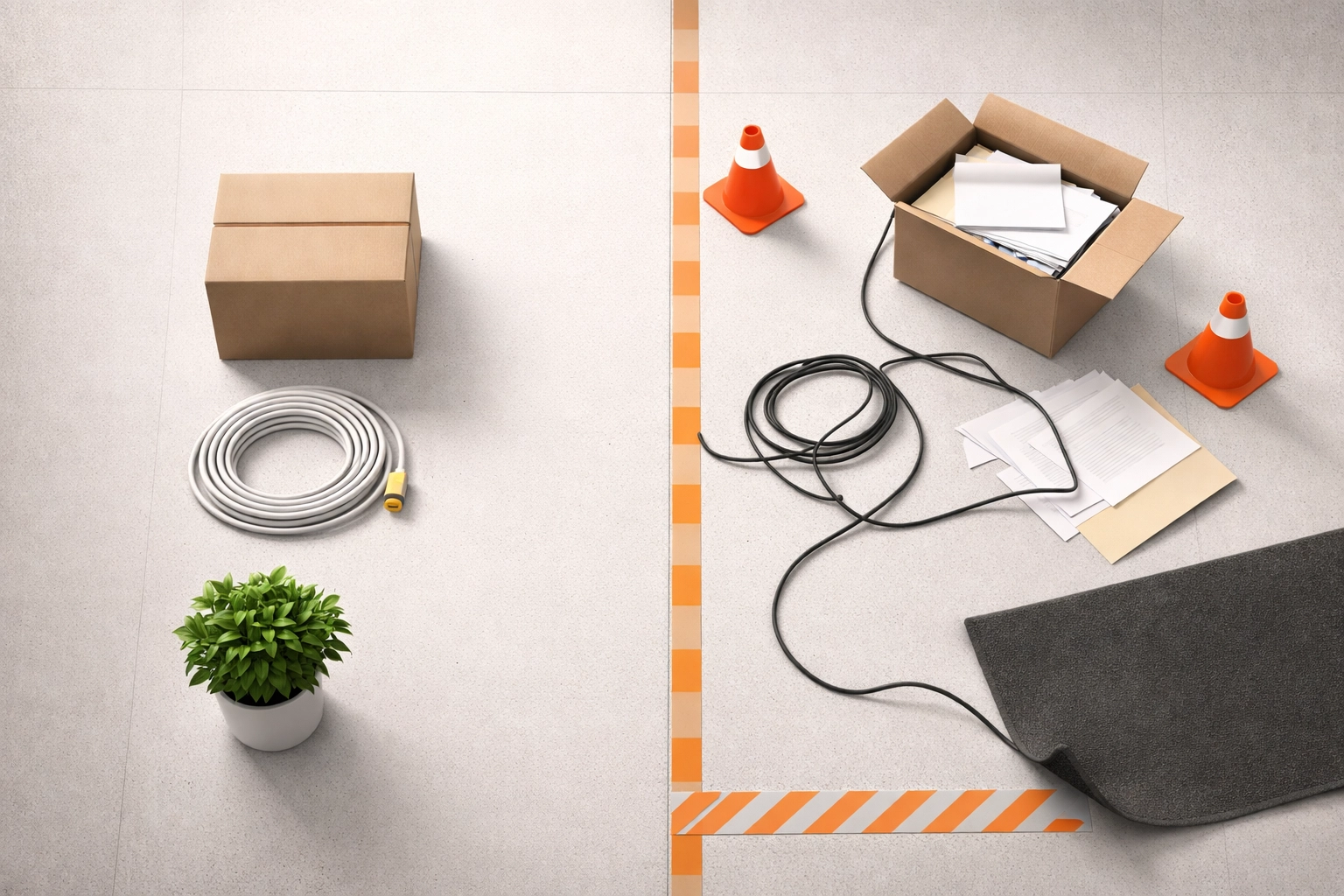
Pro tip: Take a walk through your space right now. Look at it with fresh eyes. What's in the way that you've just gotten used to stepping around?
2. Fix Your Lighting
Poor lighting is a sneaky hazard. When people can't see clearly, they're more likely to trip over something they didn't notice or misjudge a step.
Areas that need extra attention:
- Stairwells and landings
- Storage rooms and closets
- Parking lots and building entrances
- Transition areas (like going from a bright lobby to a dim hallway)
- Restrooms
Simple solutions:
- Replace burned-out bulbs immediately (don't wait for "later")
- Add motion-sensor lights in low-traffic areas
- Use nightlights or LED strips along baseboards in dim hallways
- Keep windows clean to maximize natural light
Good lighting isn't just about safety, it also helps with productivity and mood. It's a win all around.
3. Use Proper Signage
You know that "Wet Floor" sign that lives in the janitor's closet? It only works if you actually use it.
When to put up warning signs:
- Immediately after mopping or cleaning floors
- When there's a spill (even a small one)
- During rainy weather when people track in water
- When there's a temporary hazard like a loose tile or uneven surface
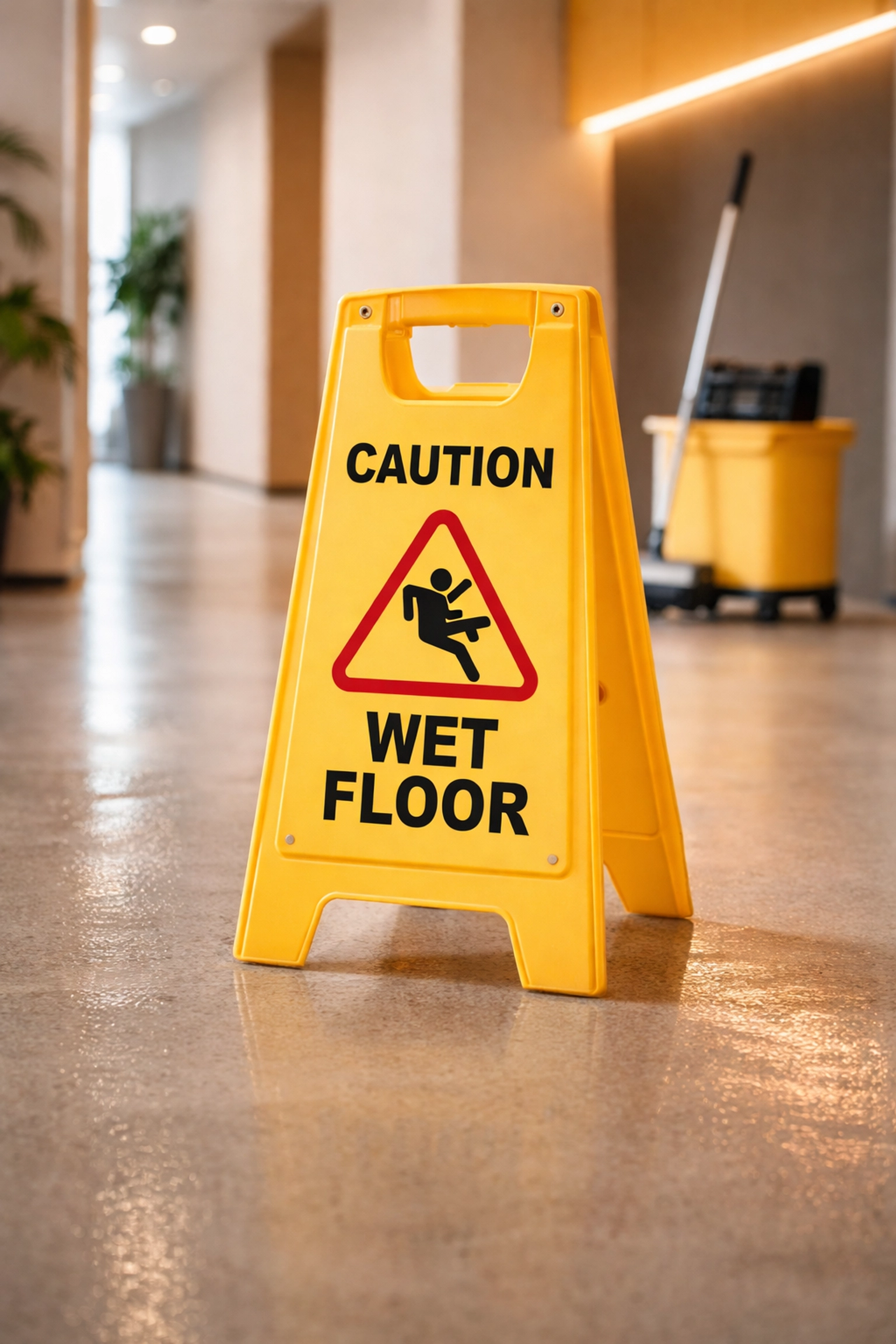
Signage best practices:
- Place signs where people will see them before they reach the hazard
- Use bright colors (yellow is the universal "caution" color)
- Make sure signs are sturdy and won't tip over easily
- Remove signs promptly once the hazard is gone (leaving them up too long makes people tune them out)
"Safety isn't expensive, it's priceless." – Unknown
A simple sign costs a few dollars. A workers compensation claim? That costs a whole lot more.
4. Encourage Good Footwear
This one requires a little diplomacy, but it's worth addressing.
The shoes your team wears can make a big difference in preventing slips and falls. High heels, flip-flops, worn-out soles, and slippery dress shoes can all increase risk.
What helps:
- Shoes with slip-resistant soles
- Proper fit (shoes that are too big or too small cause problems)
- Good tread that's not worn smooth
- Closed-toe shoes in areas with heavier foot traffic or potential hazards
How to approach this:
- Include footwear guidelines in your employee handbook
- Lead by example
- If your workplace has specific hazards (like a stockroom or kitchen), consider providing slip-resistant shoe allowances or requiring specific footwear in those areas
You don't need to be the "shoe police." Just make sure your team understands that the right footwear is part of staying safe at work.
5. Conduct Regular Safety Inspections
Here's where you turn all these tips into a habit.
A quick, regular walkthrough of your space can catch hazards before they cause problems. You don't need a fancy checklist (though those help). You just need to look around with intention.
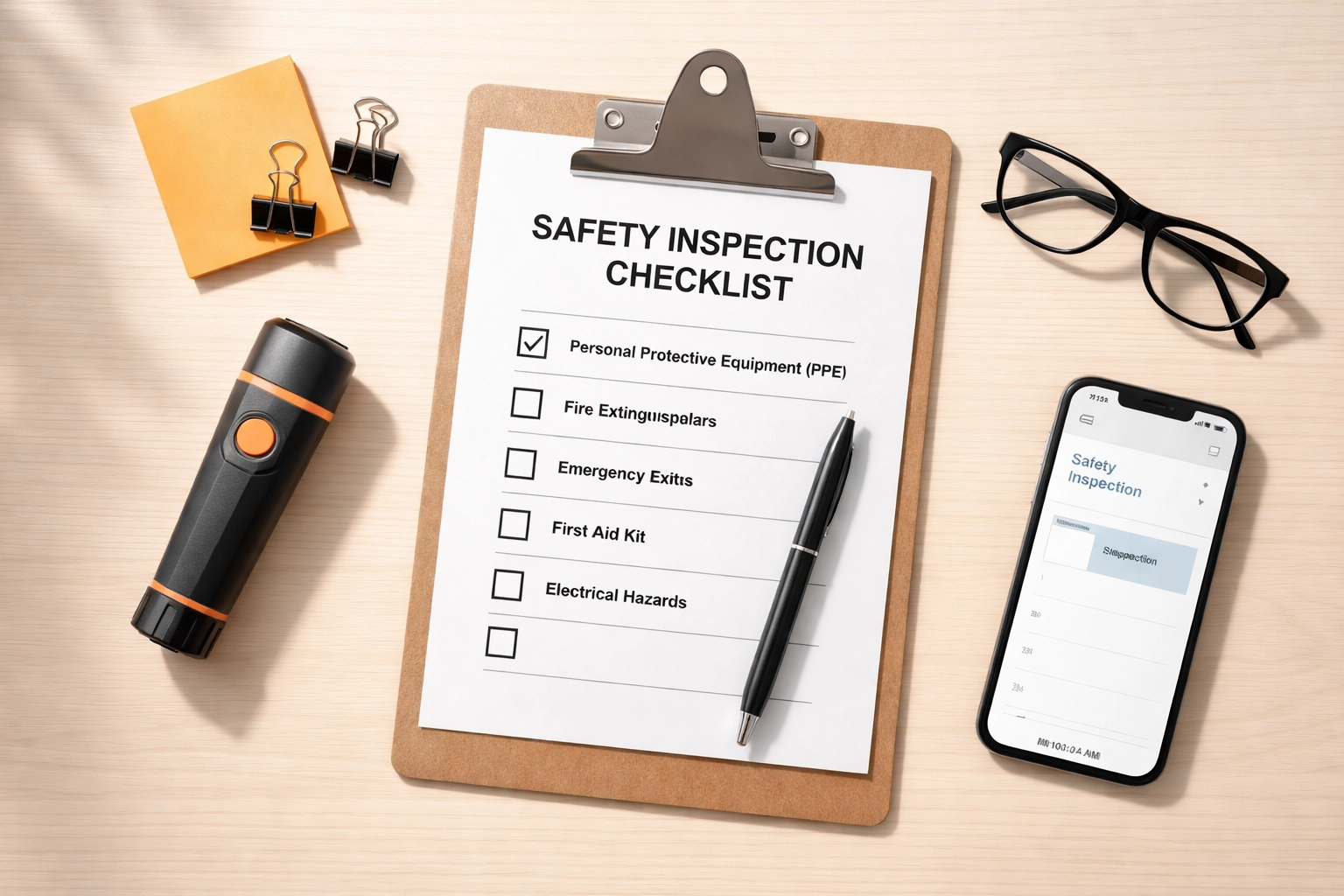
What to look for:
- Spills or wet spots
- Damaged flooring (cracks, holes, loose tiles, or curled carpet edges)
- Cluttered walkways
- Burned-out lights
- Missing or damaged handrails
- Worn stair treads
- Entrance mats that have shifted or bunched up
Create a simple routine:
- Daily: A quick visual scan of high-traffic areas
- Weekly: A more thorough walkthrough of the entire space
- Monthly: A documented inspection with notes on what was found and fixed
Keeping records of your inspections is also helpful if you ever need to show your business insurance provider that you take safety seriously.
The Connection to Your Business Insurance
Speaking of insurance, let's connect the dots.
When your workplace is safe, you're less likely to have claims. Fewer claims can mean:
- Lower workers compensation premiums over time
- A better experience rating with your insurance carrier
- Peace of mind knowing you're protecting your team and your business
Safety and smart business insurance coverage go hand in hand. One doesn't replace the other, they work together.
QUESTIONS? If you're not sure whether your current coverage is right for your business, we're always happy to chat. You can request a quote or just reach out to say hello.
Your Action Plan for Today
Let's make this easy. Here's what you can do right now:
- Take a 5-minute walk around your workspace and look for hazards
- Pick one thing from this list to fix or improve today
- Share this post with your team so everyone's on the same page
- Schedule a recurring reminder for weekly safety walkthroughs
Small steps add up to big results.
Coming Up Next in Our Safety Series
This is just Day 1! Over the next four days, we'll cover:
- Day 2: Keep the Rubber Side Down: Safety Tips for Your Fleet Drivers
- Day 3: Farm Safety 101: Protecting Your People and Your Equipment
- Day 4: The Volunteer Safety Guide: Protecting the Heart of Your Nonprofit
- Day 5: Don't Get Burned: Fire Prevention Basics for Your Business
Stay tuned, and stay safe out there!
Adams & Associates is here to help you protect what matters most. Have questions about your business insurance or workers compensation coverage? Contact us anytime( we'd love to hear from you. )